The biggest opportunity in a Cat B refurbishment is how you repurpose what isn’t working.
Examples that make a real difference:
Smaller, smarter meeting rooms
Swap oversized boardrooms for a mix of huddle spaces and hybrid-ready rooms that suit how meetings actually run now.
Flexible collaboration areas
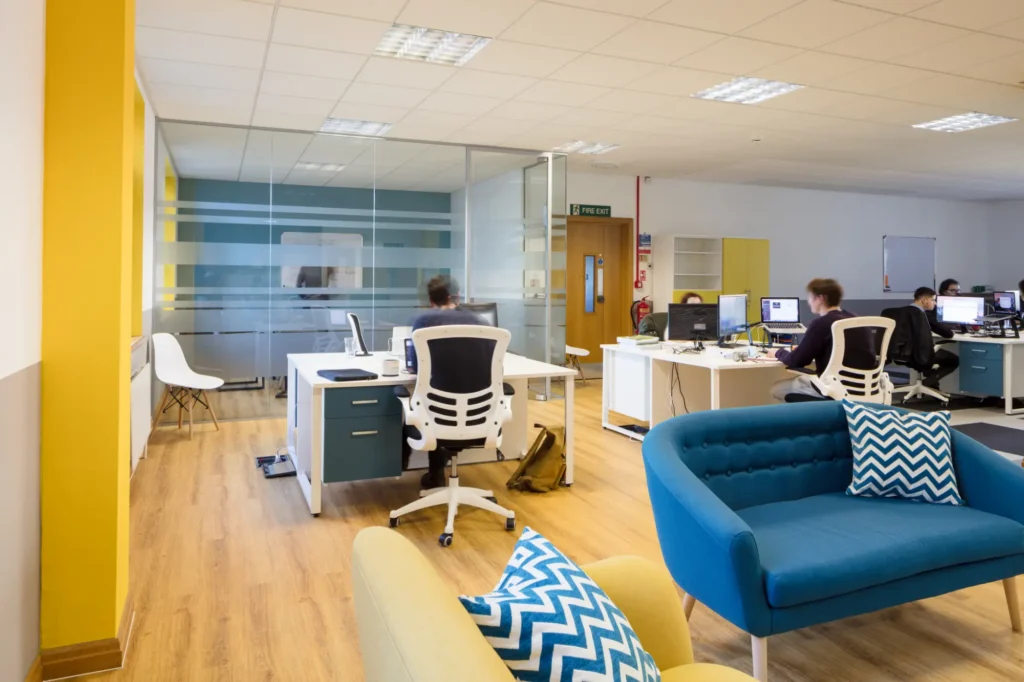
Spaces that can shift between team catch-ups, workshops and informal working, rather than fixed layouts that limit use.
Defined quiet zones
Areas designed for focus, where people can work without interruption when they need it.
Central social spaces
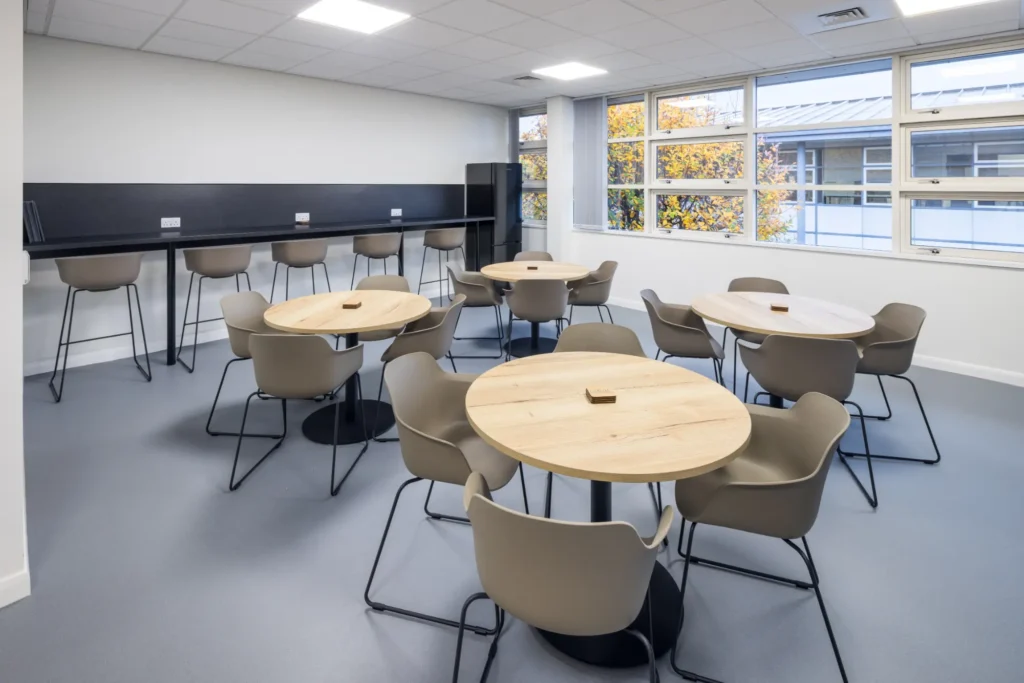
A well-designed breakout area can become the natural point people gravitate towards, helping rebuild day-to-day interaction.
Partitioned zones that still feel open
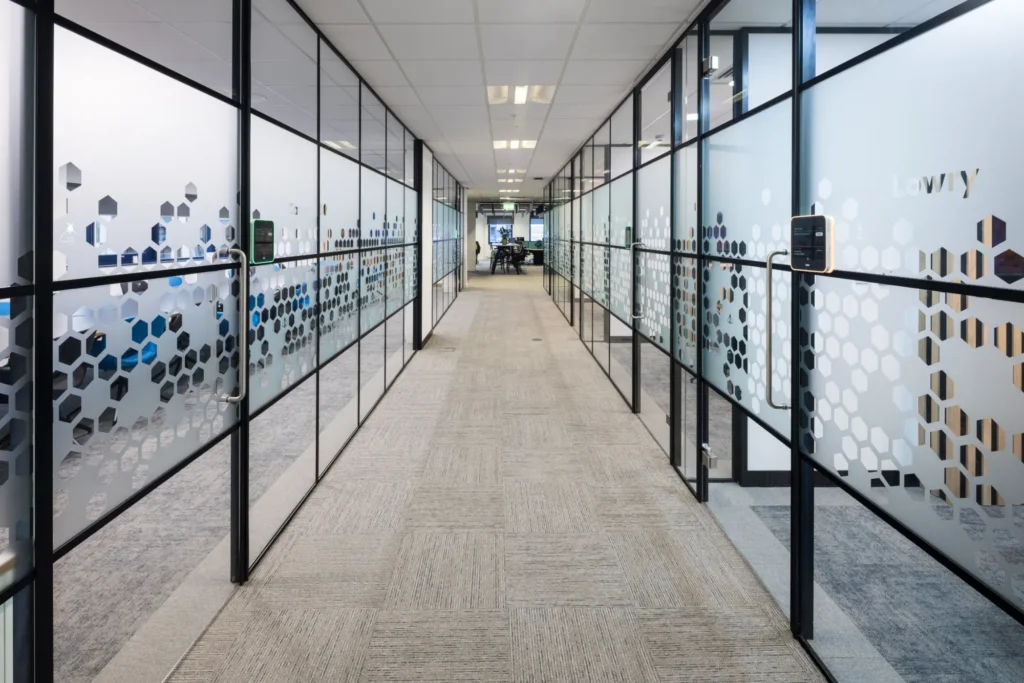
Using glazed or modular partitions keeps the flow of light while giving each area a clear function.